Being honest about it
How these pictures were made
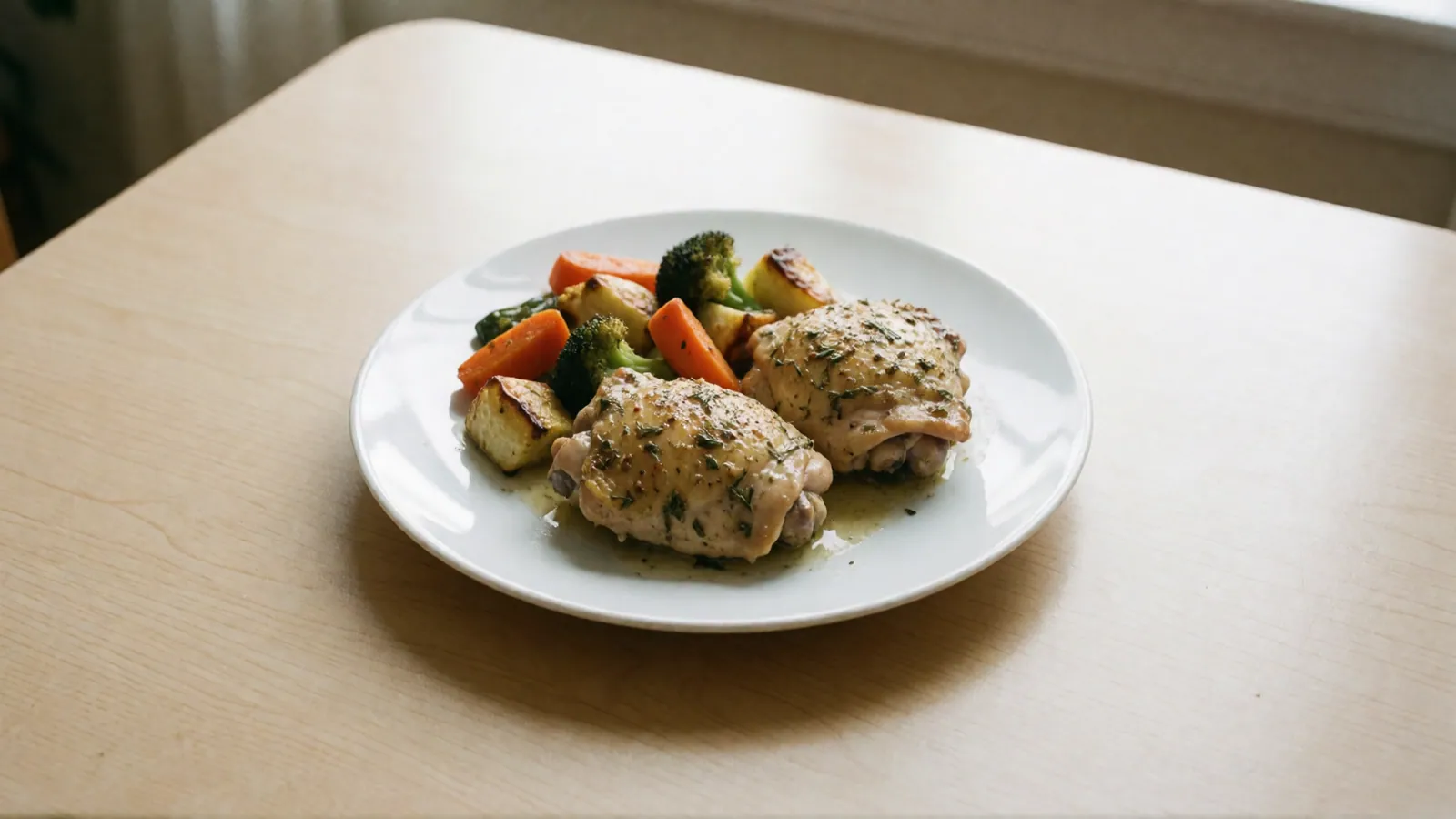
Every picture on this site was generated, and every one says so. None shows a face, a word anybody could read, or a real kitchen.
AI-generated illustration. Not a real dish, kitchen or event.
Generated, not photographed
This caterer is invented, so there is no kitchen to photograph, no tray that was ever filled and no event that ever happened. Every picture on this site was generated from a written description, looked at full size before it was used, and labeled where it appears.
About the pictures. Every picture on this site was generated. No face appears in any of them; two show a pair of hands and are labeled as generated people. Nothing in any frame is a thing anybody could read, and no picture shows alcohol, a flame or a dish the menu does not sell.
The six rules the pictures were made under
Each rule is a decision about what a description asks for, and what it leaves out.
No face in any picture
Most pictures have nobody in them at all. Two show a pair of hands and forearms setting down food, and those two carry the label for a generated person.
Nothing anybody could read
The trays are plain matte black, the platters and bowls plain white, the lunch boxes plain brown card, the drinks in glass pitchers and a steel carafe. There is no menu card, label, sign, can, bottle or van in any frame.
No alcohol and no flame
No wine, no glass of anything stronger than lemonade, no bar. No candle on a table and no flame under a dish.
Only food the menu sells
Every dish in a picture is one the menu lists, cooked the way the menu describes it.
An American kitchen and American rooms
A Queens kitchen in white tile and stainless steel, Manhattan meeting rooms with the blinds half down, a brick-walled loft and a backyard behind a row house.
Every picture labeled
Every picture carries the label "AI-generated illustration. Not a real dish, kitchen or event.", or with hands in it "AI-generated illustration. Not a real person, dish or event.".
The two labels
AI-generated illustration. Not a real dish, kitchen or event.
On every picture of food, a room or a table. A generated tray can look exactly like a real one, and the label says it is not this caterer's, or anybody's.
AI-generated illustration. Not a real person, dish or event.
On the pictures that show a pair of hands. Nobody's face is in any of them, and the hands belong to nobody.
A page's header picture carries its label in a line under the heading; every other picture carries it on the picture itself. Nothing on this site removes or shortens a label.
Why there is a label at all
As the rules read in October 2026.
- N.Y. General Business Law § 396-b (opens the source in a new tab) An advertisement that uses a generated person says so conspicuously.
- N.Y. General Business Law § 350 (opens the source in a new tab) False advertising in the conduct of any business is unlawful in New York.
The first rule is about generated people, and only two pictures here have so much as a hand in them; they carry the label for a generated person anyway. The label is on every other picture for the plainer reason behind the second rule: a generated dish at a real-looking address is easy to take for the real thing, and somebody choosing a caterer for forty colleagues should not be shown food that was never cooked without being told.
Why no faces, nothing to read, no bottle and no flame
A smiling chef and a room of happy guests are the commonest pictures on a catering site, and the hardest to justify here: a generated face is nobody's, and a picture of guests enjoying an event implies an event that took place. So the pictures show food, rooms and tables, and the words say what happens in them.
Nothing in any frame can be read, because anything legible on a caterer's site reads as a claim: a card on the wall looks like a grade, a label on a bottle looks like a brand that supplies the kitchen, lettering on a van looks like a business that exists. A plain tray says nothing the words do not.
No picture shows alcohol, because this caterer serves none, and none shows a flame, because no flame goes out with a drop-off. A picture that showed either would promise what the rest of the site refuses. And every dish in a picture is one the menu sells, because a photograph of food the kitchen does not make is the oldest trick on a menu.
A real caterer built from this design would show its own kitchen and its own food, photographed as they are, and would leave out anything a visitor could take for a grade, a certificate or a promise.
Order a drop-off, or plan an event
Order a drop-off for ten to sixty guests by noon on the kitchen day before, or tell us about an event and we'll write you an estimate.