The kitchen
Keeping food hot and cold
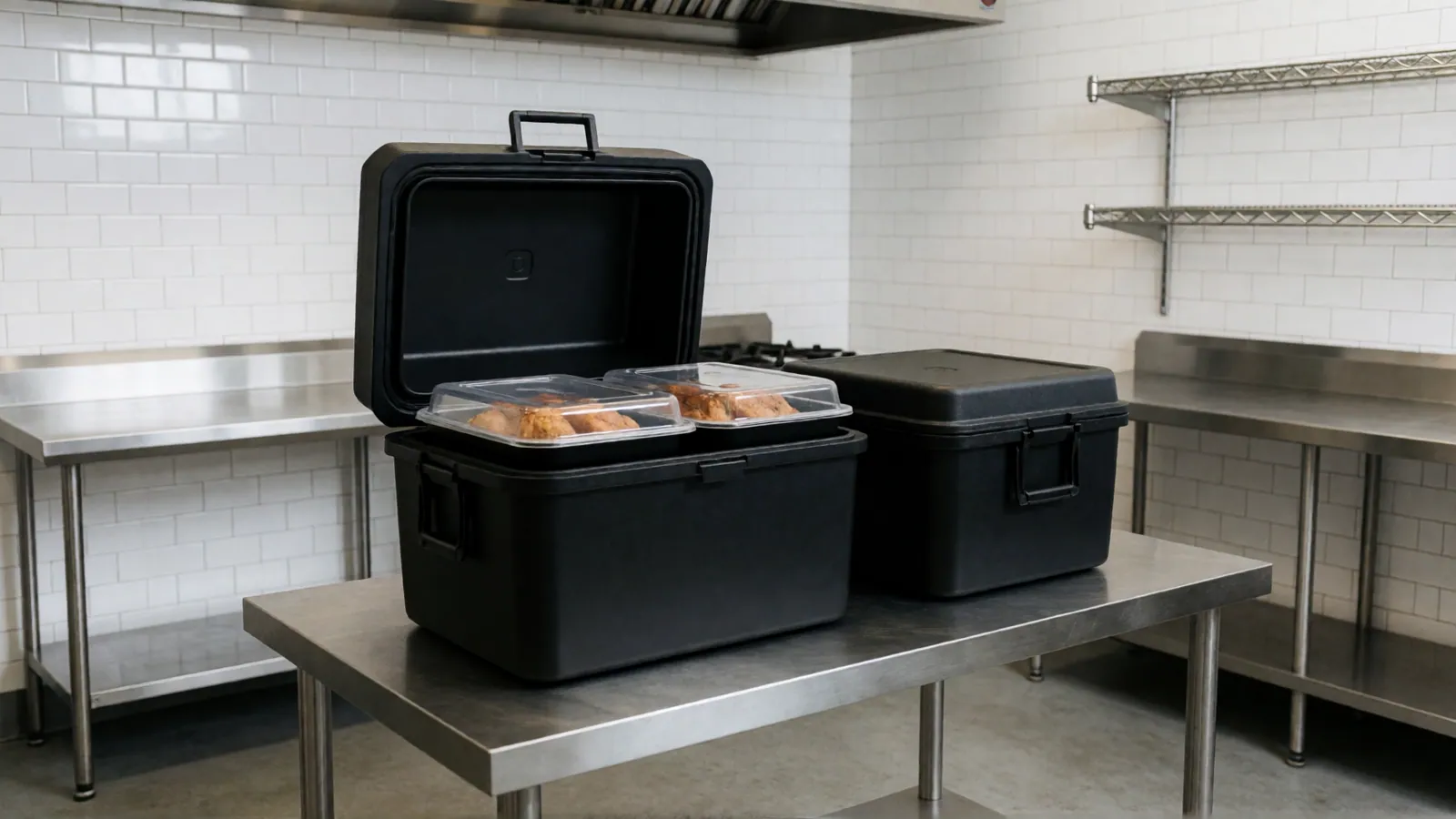
Hot food leaves the kitchen hot and arrives in insulated carriers, with nothing lit. Once it's on your table, please serve it within two hours.
AI-generated illustration. Not a real dish, kitchen or event.
Two clocks
The kitchen's clock runs until the trays are on your table. Yours starts then.
While the food is ours, in the kitchen and in the van, hot food is kept hot and cold food cold, and the rules for that are the City's: they are at the foot of this page. Eighteen dishes on the menu travel hot. Rafael starts the pork shoulder the afternoon before it goes out and the rice an hour before the van leaves.
Once the trays are set out, nobody in the kitchen can see them, so the honest advice is the one for any food left out at room temperature, which is the two hours on the label.
Two hours once it arrives. Hot food leaves our kitchen hot and cold food leaves it cold. Once it's with you, please serve it within two hours (one hour outdoors in hot weather) and refrigerate anything left over.
Every tray, labeled. Every tray leaves the kitchen labeled with the dish, how many guests it serves, the allergens in its recipe, and the time it left.
Hot, without a flame
Hot, without a flame. Drop-off orders arrive hot in insulated carriers, ready to serve. We don't send fuel cans or burners. At staffed events we use chafing fuel only where your venue allows open flame.
A fuel can under a tray in a meeting room is a flame in a room full of people, and many office buildings don't allow one. Insulated carriers keep a tray hot for the journey; the window, booked to end just before you eat, does the rest.
Cooked through. Nothing on the drop-off menu is raw or undercooked: no sushi, no oysters, no runny eggs.
What to do with what's left
Put leftovers in the refrigerator once the meal is over, in the trays they came in or in smaller containers, and don't leave a tray out for the afternoon. In a backyard or on a terrace in summer, the time is shorter, and the trays are better kept in the shade until people are ready to eat.
The rules behind it
Each is described in a sentence of its own.
- N.Y.C. Health Code § 81.09 (opens the source in a new tab) Food that can spoil is held at or below 41°F or at or above 140°F.
- N.Y.C. Health Code § 81.10 (opens the source in a new tab) A kitchen may hold food out of temperature only for a limited time, labeled with when to discard it, and never on a buffet.
- 3 RCNY § 308-01 (opens the source in a new tab) Open flame in a place of assembly needs a Fire Department permit, and fuel for warming food has its own rules on the table.
Order a drop-off, or plan an event
Order a drop-off for ten to sixty guests by noon on the kitchen day before, or tell us about an event and we'll write you an estimate.