The journal
Ordering lunch for an office, without the panic at 11:45
The head count, the deadline, the window, the allergy question and the plates: the five things to settle the day before.
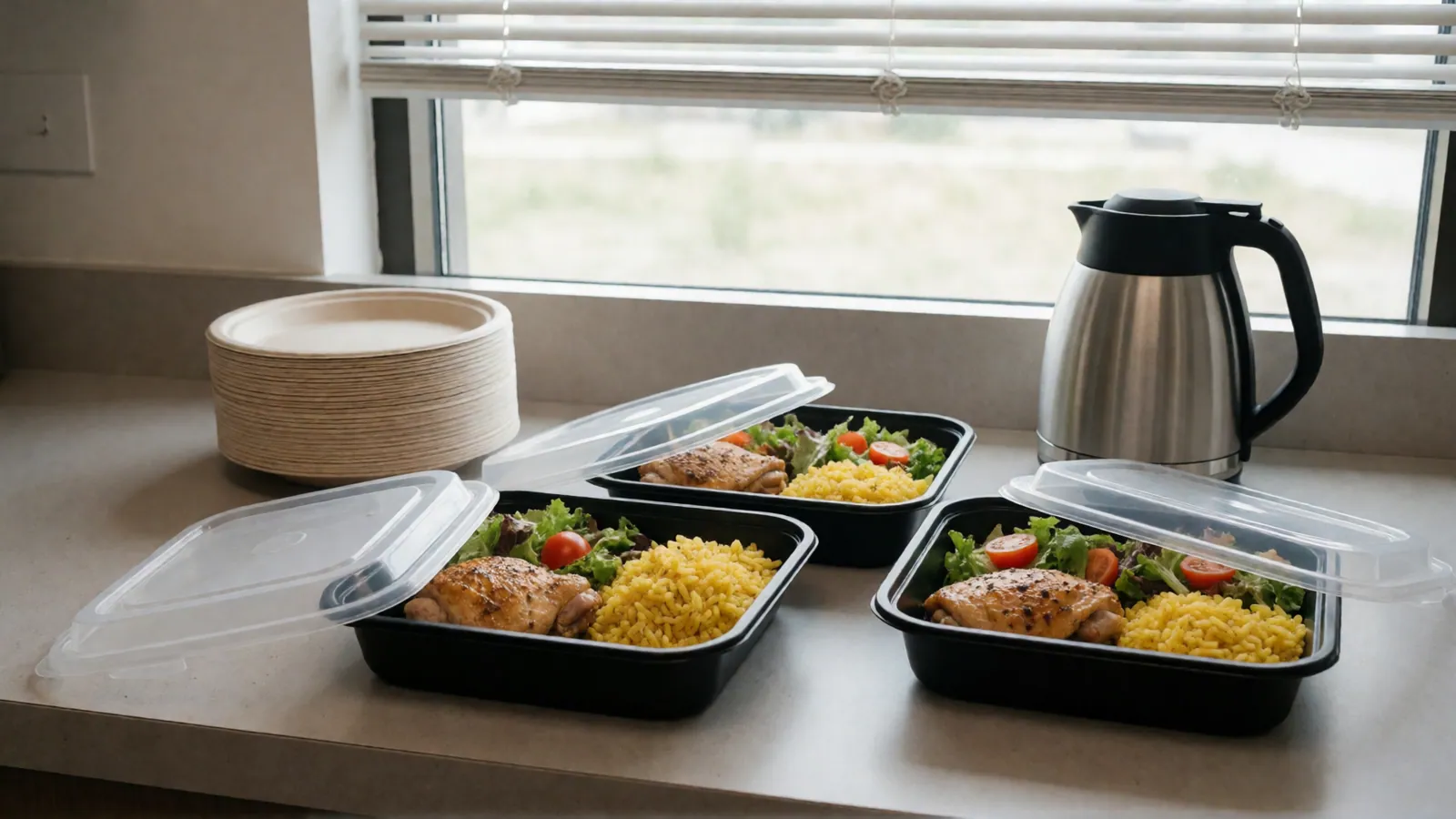
AI-generated illustration. Not a real dish, kitchen or event.
Office lunches go wrong in the same few ways: the count changes on the morning, the food arrives as the meeting starts, nobody asked about the colleague with the allergy, and there are trays but nothing to eat them with. Nearly all of it is settled by doing five things the day before, before the kitchen's cut-off at noon, while there is still time to change the order. Here they are in the order a catering coordinator would ask them.
1. The head count, and the people inside it
Count the people who said yes, not the people invited, and then count inside that number: how many don't eat meat, how many will eat at their desks and would rather have a box with their name on it, and whether anybody has mentioned an allergy. The fewer surprises inside the number, the less food goes back in the carriers.
The working lunch takes care of variety by itself, at one price a guest: a sandwich or wrap a head from up to four kinds, a garden salad and the cookie platter. At least five of any one kind, so a platter has a choice on it rather than one of everything.
The smallest order. The smallest order we deliver is for ten guests and $200 of food before tax. In Midtown Manhattan it is $350, because the tunnel toll and the congestion charge come with every trip there. An order below it is not taken; there is no small-order fee.
2. The deadline
When to order. Order by noon on the kitchen day before your delivery. Orders for forty guests or more, and a few dishes that take longer (smoked salmon and bagel platter, slow-roast pork shoulder with mojo, roast salmon and eggplant parmesan), need two kitchen days; the tres leches sheet cake needs three kitchen days. Kitchen days are Monday to Saturday, except the days we close.
The cut-off is the moment the kitchen buys and starts your food, which is why it is also the last moment to change or cancel without a charge. After it, cancelling costs half the food price, because the food has been bought by then.
Large orders and a few slow dishes need a second kitchen day: the pork shoulder roasts overnight, and the breakfast pastries are baked between five and six on the morning itself. So the morning before is early enough for a sandwich lunch for twenty, and too late for a hot buffet for forty.
3. The window, and why it ends early
Choosing a window. You choose a delivery window: half an hour in Queens and Greenpoint, an hour in Midtown Manhattan. Book it to end about thirty minutes before you want to eat, so there's time to set the trays out.
Book the window to end before the meal, not at it. The half hour before the meal gives the driver time to unload, set the trays out in the order they will be eaten and take the empty carriers back, and it absorbs a slow freight elevator or a front desk that signs in every visitor. If lunch is at 12:30 pm, the window should end by noon.
Whoever you order from, tell them the floor, the suite and what the front desk will ask the driver for. It is a common reason a lunch that reached the building on time reaches the room late. Windows fill, too, and the popular ones first:
Two vans, one kitchen. We cook for 300 guests a day at most and run two vans, so a window or a whole day can fill. The form shows only what is still open, and the last place in a window goes to whoever confirms first.
4. The allergy question
The State asks every menu to carry one sentence, and every menu here does: "If you have a food allergy or intolerance, please notify us." The order form asks the same question, with a box for each of the nine major allergens and a line for anything else.
Ask the room before you order, not after: one e-mail to the people coming, with the question in it, is enough. If somebody answers, put it on the form and expect a call.
If you have a food allergy or intolerance, please notify us. Tell us about an allergy on the order form and the kitchen telephones you before your food is made, to go through every dish on the order.
5. Plates, coffee and the cupboard
Plates if you ask. New York City asks restaurants and caterers to send plates, cutlery and napkins only when you ask for them. Tick the box if you'd like them for every guest; they are part of the price. Serving spoons and tongs come with each tray.
Check the office kitchen before you tick the box: plenty of offices keep plates and forks already, and the box exists so that nobody receives a second set they never asked for. Coffee comes in a steel carafe that is collected on the next kitchen day, so ask whoever tidies the kitchen to leave it out.
A working lunch for twenty-five, worked out
A working lunch for twenty-five A training day in Long Island City
- Working lunchtwenty-five guests at $22 a guest$550.00
- Fooddelivered in Western Queens and Greenpoint$550.00
- Sales tax (8.875%)on the whole order$48.81
- Total$23.95 a guest with tax$598.81
Sandwiches and wraps from up to four kinds, a garden salad and cookies, at one price a guest. Order one kitchen day ahead, by noon. Cancelled after the cut-off, it would cost $275.00, half the food.
Nothing on that total is paid on the website. The confirmation arrives by e-mail with a link to the order's own page, where you can check it or cancel it, and an invoice follows. If the lunch happens every week, it is still one order at a time:
No subscription. Every order is a single order. There is no weekly plan or subscription to sign up to; an office that orders every Tuesday places an order every Tuesday.
Order a drop-off, or plan an event
Order a drop-off for ten to sixty guests by noon on the kitchen day before, or tell us about an event and we'll write you an estimate.