The journal
What to ask your venue before you book a caterer
Its kitchen, its rules about flame, who runs the bar, when you can get in and when you must be out: the questions that change a catering quote.
AI-generated illustration. Not a real dish, kitchen or event.
A catering estimate is built on the venue as much as on the menu. Two halls with the same guest list can produce two very different quotes, and the difference is almost always in questions nobody asked before the date was booked. These are the ones to ask the venue first, each with the reason it changes what a caterer quotes.
Nine questions for the venue
Is there a kitchen, or only a room?
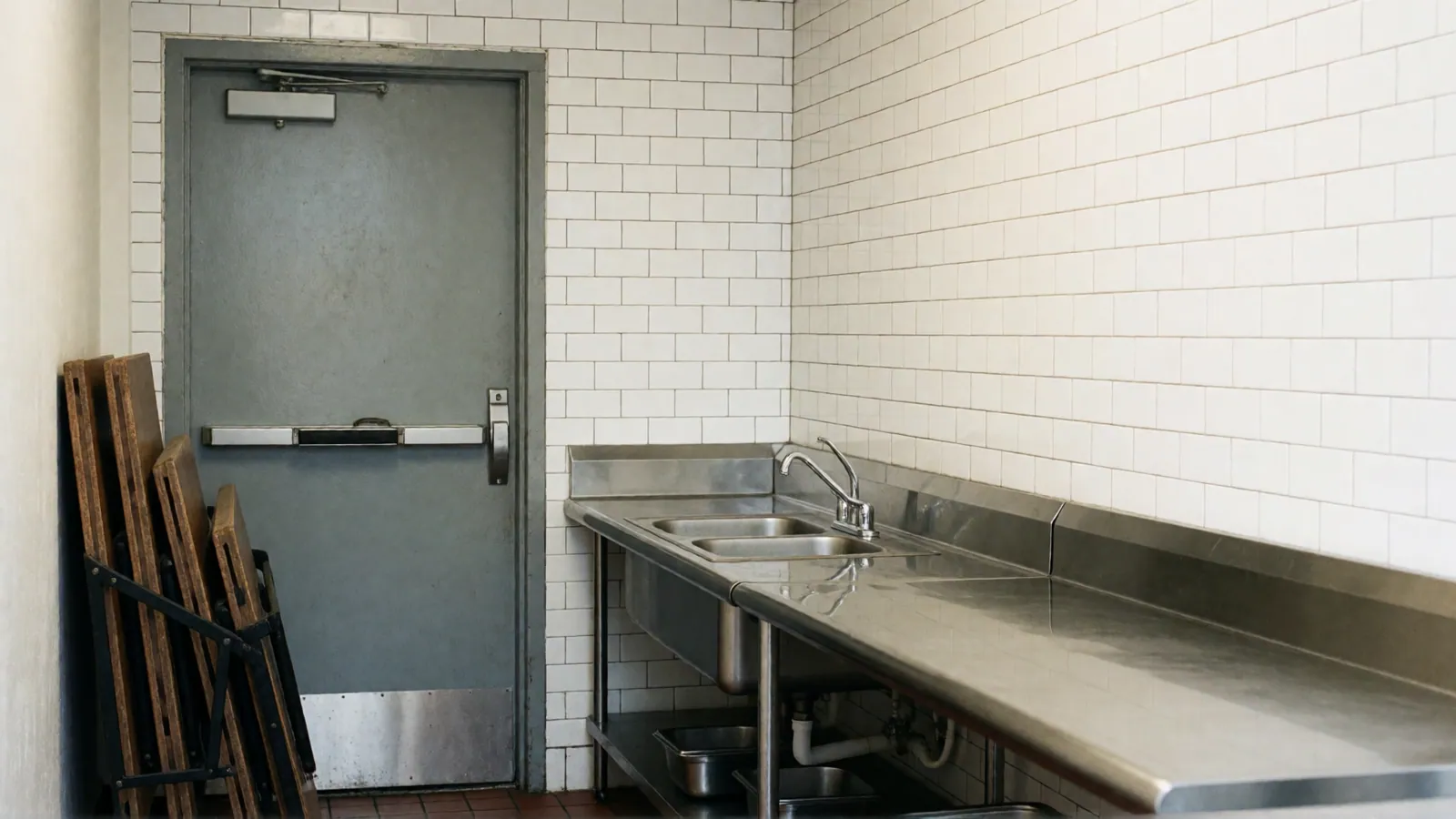
A working kitchen with a sink, refrigeration and power lets a chef finish dishes on site. A room with a socket means everything arrives cooked and is served from carriers, and the menu is planned around food that holds well. Ask to see the kitchen, not only to hear that there is one.
Does the building allow open flame?
Open flame in a place of assembly needs a Fire Department permit, and fuel for warming food has its own rules on the table. Ask whether this building allows a flame for warming food; if it does not, the menu is planned around food that holds without one.
Who runs the bar?
If the venue has a bar of its own, ask what it charges and what guests may bring. If it does not, ask whether it allows a licensed bar service in, and how much room the bar will need, because the bar and the food tables share the floor.
When can we get in, and when must we be out?
Access decides staff hours. Every person on a staffed event here is booked for at least five hours, setting up and clearing away included, so an early start or a late finish adds hours to every line of the estimate. Ask for both times: the earliest a caterer may arrive, and the moment the room must be empty.
Where does the van stop, and how does the food reach the room?
A loading door beside the kitchen and a long carry up two flights of stairs are different evenings. Ask where a van may stop, whether there is a freight elevator, and how far it is from the door to the room.
What does the venue supply?
Tables, chairs, linens, plates, glasses: whatever the venue does not provide has to come from somewhere, and it appears on somebody's bill. Ask for the list, with how many of each.
Is the event closed to invited guests?
Food served to the public at a street fair, festival or similar event needs a temporary permit; a closed private function does not. Ask whether the venue treats your evening as a closed event for invited guests, and say so to your caterer.
What does the venue ask of a caterer?
Some venues keep a list of caterers they allow, some ask for proof of insurance, some charge for bringing in a caterer from outside, and some set rules on music, noise and clearing up. Each is worth knowing before an estimate is written, not after.
And if it is outdoors?
Ask about shade, power and a covered place for the food, and how long it will be between the ceremony and the meal. Heat shortens how long food can stand, and a long gap needs planning.
What we do with the answers
Callum Ferreira-Santos, events manager
Callum visits a venue before he quotes for it, to see its kitchen, its doors and its rules about flame.
The answers go into the estimate: the menu the kitchen can serve in that room, the staff and their hours, and anything the venue does not supply. Nothing is held until both sides have signed:
A conversation first. Weddings, receptions and anything with our staff start with a conversation, not an order. We'll send a written estimate with every cost on its own line, staff hours included, and explain any deposit and what happens if plans change before you sign anything.
No date is held yet. Sending an enquiry doesn't hold a date. A date is held for you only when we have both signed the agreement, and we work one staffed event a day.
Three things we say before you ask
Private events only. We cater private events: offices, homes and venues you've booked. Your venue holds its own permits; we're happy to tell you what to ask them. We don't cater street fairs, festivals or events open to the public.
Hot, without a flame. Drop-off orders arrive hot in insulated carriers, ready to serve. We don't send fuel cans or burners. At staffed events we use chafing fuel only where your venue allows open flame.
No bar. We don't supply, sell or serve alcohol, and our staff don't pour it, even when it's your own. If you'd like a bar, your venue or a licensed bar service can run it, and we'll work around them.
Tell us about the venue
Order a drop-off for ten to sixty guests by noon on the kitchen day before, or tell us about an event and we'll write you an estimate.